Businesses today need more than just a website to succeed online. They need a strong digital presence, effective marketing strategies, and the right tools to connect with potential customers. Whether you run a small business, a growing startup, or an established company, investing in the right digital marketing services can help you improve online visibility, attract relevant visitors, generate leads, and build lasting customer relationships.
However, choosing the right services can be challenging. Search engine optimization, social media marketing, paid advertising, website development, and AI-powered search optimization each serve different purposes. Understanding how these services work together can help you make informed decisions and develop a strategy that supports your business goals.
What Are Digital Marketing Services?
Digital marketing services help businesses promote their products or services through online channels. These strategies focus on reaching the right audience, improving brand awareness, increasing website traffic, and encouraging potential customers to take action.
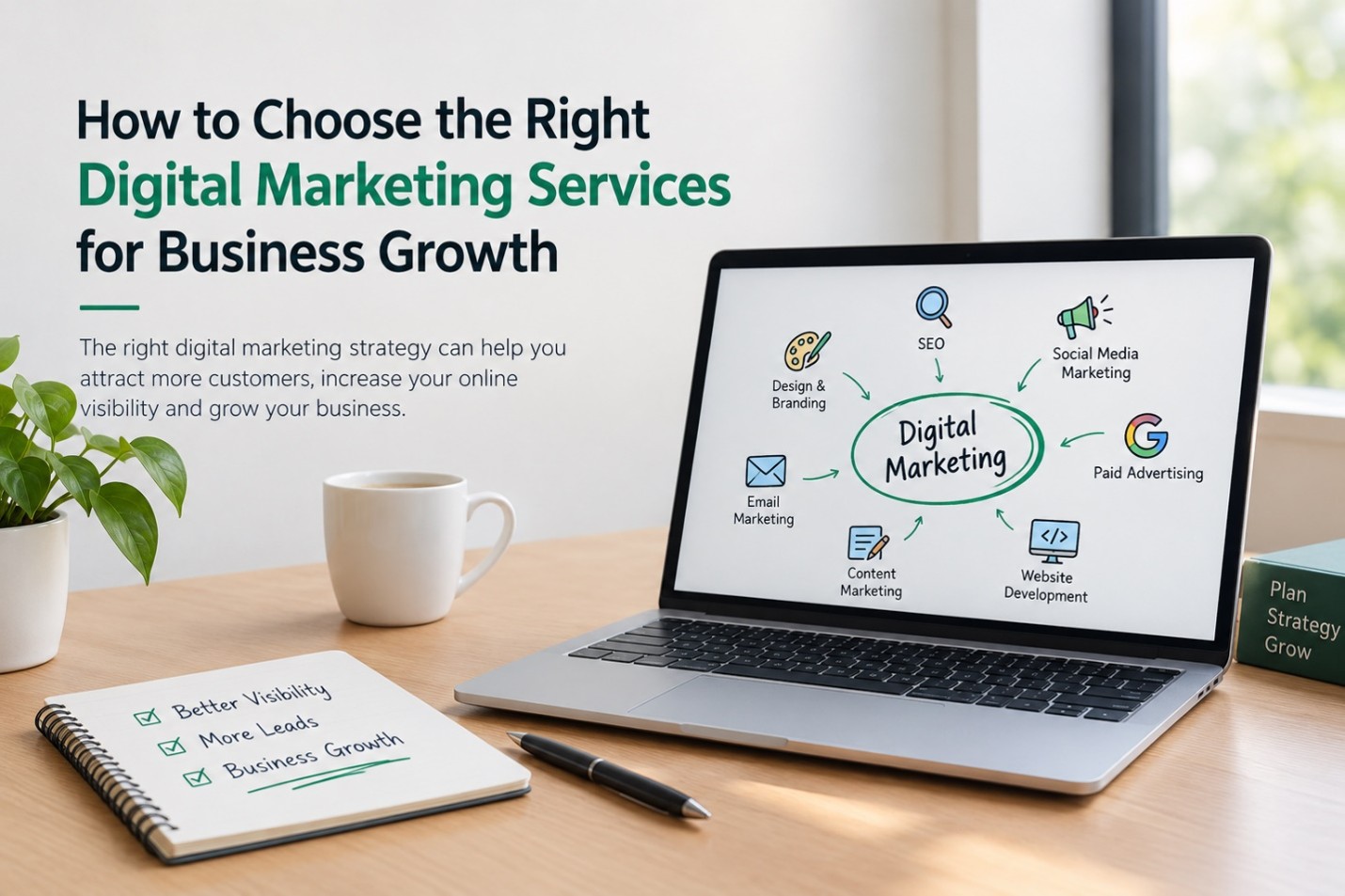
Depending on your business objectives, a digital marketing strategy may include SEO, social media optimization, content marketing, Google Ads, website development, email marketing, graphic design, and AI search optimization.
The most effective approach begins with understanding your audience, identifying your business goals, and selecting services that address your specific needs.
- Search Engine Optimization for Long-Term Visibility
Search engine optimization (SEO) helps improve a website’s visibility in organic search results. When potential customers search for products, services, or solutions related to your business, a well-optimized website has a better opportunity to appear in relevant results.
SEO involves several important activities:
- Keyword Research: Identifying relevant search terms that potential customers use when looking for your services.
- On-Page Optimization: Improving page titles, meta descriptions, headings, internal links, and website content.
- Technical SEO: Addressing website crawling, indexing, mobile usability, site structure, and performance issues.
- Content Optimization: Creating useful, relevant information that answers customer questions.
- Website Authority: Developing a credible online presence through relevant mentions and quality backlinks.
SEO is particularly valuable for businesses seeking sustainable organic visibility. Results depend on competition, website condition, content quality, and the consistency of optimization efforts.
- AI SEO and Answer Engine Optimization
The way people discover information online continues to evolve. In addition to traditional search engines, users increasingly interact with AI-powered tools to ask questions, compare options, and find recommendations.
AI SEO focuses on making website content easier for search systems and AI-powered platforms to understand. Answer Engine Optimization (AEO) focuses on providing clear, direct answers to relevant questions.
Businesses can strengthen their content by:
- Answering common customer questions directly.
- Organizing information with descriptive headings and logical sections.
- Providing accurate, specific details about products and services.
- Using relevant structured data where appropriate.
- Maintaining consistent business information across online platforms.
- Demonstrating expertise through helpful, trustworthy content.
For example, a business offering professional services can create pages that explain its process, service options, benefits, and frequently asked questions.
AI SEO and AEO should complement traditional SEO rather than replace it. No optimization method can guarantee inclusion in AI-generated answers, but clear and useful content can improve how information is understood and discovered.
- Social Media Optimization and Marketing
Social media marketing helps businesses connect with their target audiences on platforms where people share information, follow brands, and discover new services.
Social Media Optimization (SMO) focuses on strengthening a brand’s social presence, while social media marketing may also include promotional campaigns and audience engagement activities.
An effective social media strategy can include:
- Developing a consistent content calendar.
- Creating informative posts, graphics, and short-form videos.
- Sharing service updates and educational content.
- Maintaining consistent branding across platforms.
- Encouraging meaningful audience interaction.
- Reviewing engagement and campaign performance.
Rather than publishing content without a clear purpose, businesses should create posts that address audience interests and support specific objectives.
For example, educational posts can answer common questions, service-focused graphics can explain available solutions, and customer-focused content can help communicate a business’s value.
- Paid Advertising for Targeted Reach
Paid advertising allows businesses to promote their offerings to selected audiences through online advertising platforms. Google Ads can help businesses reach users searching for specific products or services, while display campaigns can introduce a brand to relevant audiences across supported websites and placements.
Common paid advertising services include search campaigns, display advertising, audience targeting, campaign optimization, and performance tracking.
Before launching a campaign, businesses should define their objectives. These might include generating enquiries, increasing product sales, promoting a service, or attracting visitors to a particular landing page.
A well-managed campaign typically involves:
- Researching relevant keywords and audience segments.
- Writing clear, compelling advertising copy.
- Creating landing pages that match the advertisement.
- Establishing appropriate budgets and targeting settings.
- Monitoring clicks, conversions, and other meaningful metrics.
- Refining campaigns based on collected performance data.
Paid advertising can provide immediate opportunities to reach potential customers, but results depend on factors such as competition, targeting, budget, offer quality, and landing-page experience.
- Website Development and User Experience
A business website often serves as the first point of contact between a company and a potential customer. A professional, easy-to-use website helps visitors understand the business, explore its services, and decide what to do next.
Website development should consider both functionality and user experience.
Important elements include:
- Responsive layouts for desktop, tablet, and mobile devices.
- Clear navigation and organized service pages.
- Fast-loading pages and reliable functionality.
- Accessible, readable content.
- Secure website connections.
- Contact forms and clear calls to action.
- Search engine-friendly page structures.
For example, a service business should make its offerings easy to understand and provide straightforward ways for visitors to request information or contact the team.
Website development and SEO also work together. A technically sound website creates a stronger foundation for content optimization, organic visibility, and conversion improvements.
- Content Marketing That Answers Customer Questions
Content marketing helps businesses educate their audiences, explain their expertise, and support customers throughout their decision-making process.
Useful content can include blog articles, service pages, guides, FAQs, email newsletters, and educational resources.
An effective content strategy begins with customer research. Identify the questions people ask before purchasing, the challenges they experience, and the information they need to compare solutions.
For example, a business could publish articles explaining how to choose a service provider, what to consider before making a purchase, or how a particular solution works.
High-quality content should be accurate, original, easy to understand, and relevant to the intended audience. It should provide genuine value rather than simply repeat keywords.
Consistent content marketing can support SEO, improve audience engagement, and help potential customers understand a business’s services before contacting the company.
- Email Marketing and Customer Engagement
Email marketing provides a direct way to communicate with people who have chosen to receive updates from a business.
Companies can use email campaigns to share helpful information, announce new services, distribute educational resources, and maintain relationships with existing customers.
A successful email strategy should focus on relevance and usefulness. Segmenting subscribers based on their interests, personalizing messages appropriately, and maintaining a consistent sending schedule can improve the customer experience.
Businesses should also follow applicable privacy requirements and email marketing regulations, including providing appropriate unsubscribe options.
- Branding, Graphic Design, and Video Creation
Visual communication influences how people recognize and understand a business. Consistent branding helps create a recognizable identity across websites, advertisements, social media profiles, and marketing materials.
Graphic design services may include social media creatives, promotional banners, business graphics, and other visual assets. Video creation can help explain services, demonstrate products, and communicate information in an engaging format.
For better consistency, businesses should maintain a recognizable visual style, use readable typography, select appropriate imagery, and ensure that marketing materials communicate a clear message.
Visual content should support the marketing strategy rather than serve as decoration alone.
How to Choose the Right Digital Marketing Partner
Selecting a digital marketing provider requires careful consideration. Instead of choosing services based only on price or promises, evaluate whether the proposed strategy matches your business objectives.
Consider the following factors:
- Define your goals. Decide whether you want to improve organic visibility, generate qualified leads, increase brand awareness, or improve website performance.
- Review the services offered. Choose a provider that can address your priorities through relevant services such as SEO, paid advertising, content marketing, website development, or AI optimization.
- Understand the strategy. Ask how the provider plans to approach keyword research, audience targeting, content creation, campaign management, and performance measurement.
- Discuss reporting. Regular reporting should explain completed work, important performance indicators, progress, and areas requiring improvement.
- Set realistic expectations. SEO and content marketing often require time to demonstrate meaningful results. Paid campaigns also need testing and optimization. Avoid guarantees of specific rankings, traffic levels, or sales.
- Consider long-term value. The right strategy should align with your budget, available resources, audience needs, and future business plans.
How to Measure Digital Marketing Performance
Tracking performance helps businesses understand which activities are contributing to their goals. The most useful metrics depend on the services being used.
For SEO, monitor organic traffic, keyword visibility, indexed pages, and relevant conversions. For paid advertising, review advertising spend, click-through rates, cost per conversion, and lead quality.
Social media performance can be evaluated through reach, engagement, audience growth, and website visits. Website performance should include usability, page speed, form submissions, and conversion rates where relevant.
Regular reviews allow businesses to identify opportunities, improve underperforming campaigns, and allocate resources more effectively.
Conclusion
Choosing the right digital marketing services is an important step toward building a stronger online presence. SEO supports organic discovery, AI SEO and AEO help organize content for evolving search experiences, social media marketing strengthens audience engagement, and paid advertising provides targeted promotional opportunities.
Website development, content marketing, email marketing, graphic design, and video creation can further support these activities by improving user experience and communicating a clear brand message.
The best approach is to begin with defined business goals, understand your audience, and select services that address your most important priorities. With consistent implementation, careful performance measurement, and ongoing improvements, businesses can build a more effective digital marketing strategy.
Frequently Asked Questions (FAQs)
- What are the most important digital marketing services for a business?
The most suitable services depend on your goals. SEO can support organic visibility, paid advertising can help reach targeted audiences, social media marketing can build engagement, and website development can improve the customer experience.
- How long does SEO take to show results?
SEO timelines vary depending on competition, website condition, content quality, and the amount of optimization required. Meaningful improvements often take several months, and ongoing work is generally needed to maintain progress.
- What is the difference between SEO and AI SEO?
Traditional SEO focuses on improving visibility in search engine results. AI SEO also considers how content can be understood and surfaced by AI-powered search experiences. Both benefit from clear, relevant, accurate, and well-organized website content.
- What is Answer Engine Optimization (AEO)?
AEO focuses on making content useful and easy to interpret for systems that provide direct answers to user questions. It includes answering relevant questions clearly, organizing content effectively, and maintaining accurate information.
- Is paid advertising better than SEO?
Neither is universally better. Paid advertising can provide visibility while campaigns are running, whereas SEO aims to build organic search visibility over time. Many businesses use both approaches to support different marketing objectives.
- Why is website development important for digital marketing?
A well-designed website helps visitors understand your services, navigate information, and contact your business. Mobile usability, performance, clear navigation, and effective calls to action can contribute to a better user experience.
- How does social media marketing help businesses?
Social media marketing can increase brand awareness, encourage audience interaction, distribute useful content, and direct interested users to a website. Its effectiveness depends on the audience, content, platform, and campaign objectives.
- How do I choose the right digital marketing services?
Start by identifying your target audience, business goals, budget, and current challenges. Then prioritize services that address those needs and establish measurable performance indicators to evaluate progress.
- Can content marketing improve search visibility?
Yes. Helpful, relevant content can address customer questions and support organic search visibility. Results depend on content quality, search competition, technical website factors, and how well the material meets user needs.
- How can I measure the success of a digital marketing strategy?
Track metrics connected to your objectives, including organic traffic, qualified leads, conversion rates, advertising costs, social engagement, and website performance. Review these indicators regularly to understand progress and identify improvements.